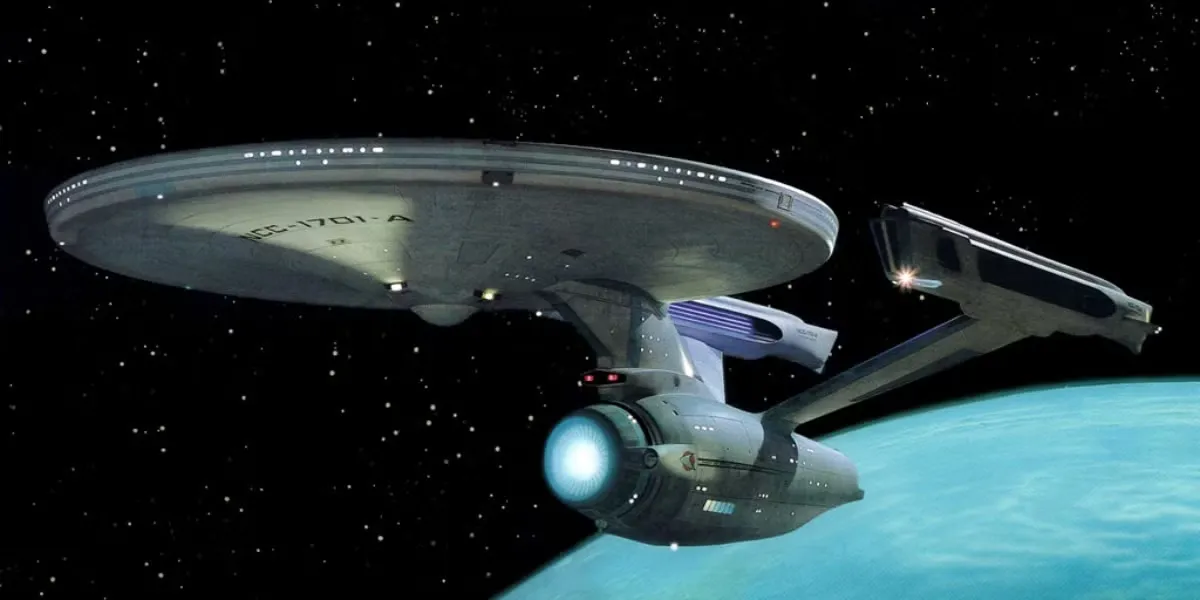
Star Trek called space “the final frontier.” In the twentieth century, when humanity was heading for the Moon, nothing better represented the unknown. More than half a century later, it no longer seems that the frontiers lie only beyond Earth.
The rapid development of AI offers a useful way to think about where we stand in human history.
The Industrial Revolution amplified human muscle with machines. The Information Revolution freed computation, memory, and communication from the limits of the human mind and physical distance. Now that an intelligence revolution has begun, even intellectual work that once required years of education and experience is increasingly within the reach of machines.
The problem of artificial intelligence has not been solved. Today’s AI still makes mistakes and has limitations. Even so, the assumption that only humans can provide advanced intellectual capabilities is already beginning to falter.
If AI makes intelligence less scarce, the bottlenecks of civilization will shift elsewhere. To think about the future, we should look at what still constrains us.
Robots
Today, most AI lives inside screens. It can write, create images, and make plans, but it cannot freely handle objects in the physical world.
Giving AI a robotic “body” changes the nature of the problem. It must perceive its surroundings through cameras and touch, plan its actions, move its limbs, and learn from failure. It must also contend with friction, gravity, breakage, and chance—things that do not exist in the world of words.
In robotics, physical tasks that humans find easy have proved difficult for machines, while advanced computation and logic were automated first. This counterintuitive pattern is known as Moravec’s paradox.
If AI can understand the physical world and act on its own until it achieves a goal, the intelligence revolution will move beyond the screen. Machines could work autonomously not only in factories and logistics, but also in construction, agriculture, care work, disaster zones, the deep sea, and space.
The difficulty depicted in Asimov’s I, Robot was not simply a matter of making robots smarter. The problem was how to interpret a set of rules in the complexity of real situations. For autonomous AI in the real world, too, the ultimate challenge may be less “Can it understand an instruction?” than “Can it act appropriately in an ambiguous world?”
Once intelligence and physical bodies come together, the meaning of human labor itself will change.
The Human Body
There is still enormous room to change the human body itself. More than two thousand years have passed since Buddhism identified birth, aging, illness, and death as fundamental forms of suffering, yet illness, aging, and death still shape our lives.
The life sciences have gradually moved from reading life to “rewriting” it. Genome editing allows us to intervene in DNA, while regenerative medicine aims to repair tissues and organs. AI-based protein structure prediction and molecular design are expanding the possibilities for discovery in drug development and the life sciences.
The practical question is not whether we can achieve “immortality,” but how far aging can become a subject of medicine. If we can understand aging not as an unavoidable fate but as the accumulation of several biological processes, the targets for intervention will change as well.
We may also move from repairing the body to extending its capabilities. As artificial organs, neural interfaces, sensory aids, and prosthetics improve, the boundary between the body we are born with and abilities gained through technology will grow less distinct.
Whether death itself will become a technical problem is unknown. But even a substantial delay in death would change the assumptions behind social institutions such as education, family, work, inheritance, and generational succession.
Reality
Humanity is also beginning to create the worlds it inhabits.
Today’s VR is plainly artificial. But if it becomes possible to reproduce touch and bodily sensation as well as sight and sound, virtual space will become less something we look at and more a place we live in.
The philosopher Robert Nozick proposed a thought experiment called the “experience machine.” He believed that many people would hesitate to connect to a machine that let them experience exactly the life they wanted, even if they fully believed that experience was real. It raises the question of whether life is valuable not only for pleasant experiences, but also for actually doing things, forming relationships with others, and being a certain kind of person.
If technology advances far enough, a philosophical thought experiment could become a real choice. We might enter the worlds of films, live in imaginary cities, or even form relationships with artificial personalities.
The ultimate form of entertainment may be to design experiences themselves rather than create works of art.
Energy and Matter
Intelligence, life, and virtual worlds are all bound by the laws of physics. Computation, travel, and manufacturing require energy and matter.
The astronomer Nikolai Kardashev classified civilizations by the scale of energy they can harness. His Kardashev scale progresses from planetary to stellar to galactic levels. What a civilization can achieve depends not just on its intelligence, but also on how much energy it can command.
Advances in nuclear fusion, efficient solar power, and energy storage could make technologies viable that do not make economic sense today. They would change the economics of desalination, carbon dioxide capture, large-scale computing, synthetic fuels, and the space industry.
The same is true of matter. As materials science and AI come together, we may move from choosing among existing materials to designing new ones with the properties we want. Advances in high-performance batteries, lightweight and strong structural materials, catalysts, and semiconductors will push the limits of other technologies outward.
If humanity survives for billions of years, the energy problem grows larger still. Stars have finite lifetimes, and over a long enough timescale the thermodynamics of the entire universe becomes a concern.
In Asimov’s short story The Last Question, even as humanity and computers evolve on a cosmic scale, one question persists: “Can entropy be reversed?” The story also imagines a world in which the laws of physics themselves may remain a limit, even in the presence of ultimate intelligence.
Space and Time
Expanding into space may be the culmination of advances in robotics, the life sciences, materials, energy, and more. More important than reaching the Moon or Mars is the ability to sustain civilization beyond Earth. If humanity ceases to depend on a single planet, the conditions for civilization’s survival will change.
As we try to go farther, time itself becomes a problem alongside space.
In Critique of Pure Reason, Kant regarded space and time as “forms of sensibility” that make human experience possible. We cannot view the world from outside space and time.
Twentieth-century relativity overturned the everyday intuition that space and time form a fixed stage. Time passes differently when we travel at high speed, and clocks also run differently in strong gravitational fields. It is physically possible to change the rate at which we move into the future.
Traveling into the past is another matter. General relativity has mathematical solutions involving closed timelike curves and wormholes, but we do not know whether any of them could be used in the real universe.
The many-worlds interpretation of quantum mechanics is also different from the science-fiction idea of “traveling to parallel worlds.” It is an interpretation of quantum mechanics, not a theory that provides a way to move between worlds.
Time travel and parallel worlds still belong to fundamental physics rather than engineering. We do not yet know whether they are technical obstacles to overcome or boundaries set by the laws of nature that cannot be crossed.
The World Itself
More fundamental questions remain unresolved.
Why does the universe exist? Does it make sense to ask what came before the Big Bang? What are dark matter and dark energy, which are thought to make up most of the universe? Does life exist anywhere beyond Earth? How does consciousness arise from matter?
Science has answered many questions about “how.” But when we ask why there is something rather than nothing, the boundary between physics and philosophy becomes less clear.
Humanity’s long history of thinking about the concept of God is connected to these questions, too. We do not know whether understanding the laws of nature well enough would make the question of God disappear or leave it with us in another form.
Rather than eliminating the unknown, scientific progress seems to move our questions to a deeper level.
Desire
In a world where intelligence is no longer scarce, what will be?
In The Matrix, machines grow humans and use the energy they draw from their bodies. Humans are a resource for machine civilization.
Recast for the age of AI, that relationship might be reversed. AI does not need humans as batteries. If the ability to solve problems, make plans, and find ways to carry them out becomes abundant, the scarce thing humans still provide may be the answer to “What do we want to accomplish?” AI supplies the means; humans supply the desires.
Since Hume, philosophy has grappled with the problem that values cannot be derived automatically from facts. No matter how much we know about the world, that knowledge alone does not tell us what we should want.
The intelligence revolution will not make intelligence worthless. It will make it less scarce. Choosing goals, inspiring others to act, and taking action ourselves will matter more relative to the ability to find the right answer quickly.
If even tedious work is automated, the question becomes sharper. In a society where people no longer need to work to make a living, can live long and healthy lives, and can create many of the experiences they want artificially, each person will have to decide for themselves what they want to do.
Choosing whom to love, making something, being needed by someone, and wondering why we were born will not go away. Scientific progress will not automatically supply human desires.
Humanity has increased its power and knowledge, and is now trying to externalize intelligence itself. We have begun to reach toward the body, reality, matter, energy, space, and time as well.
The question that remains at the end may be surprisingly simple.
Once humanity has the means, what will it want?
“The final frontier” is coming to mean more than an unknown place. I think humanity’s choice of its own ends is also one of the frontiers that remain.